
Published
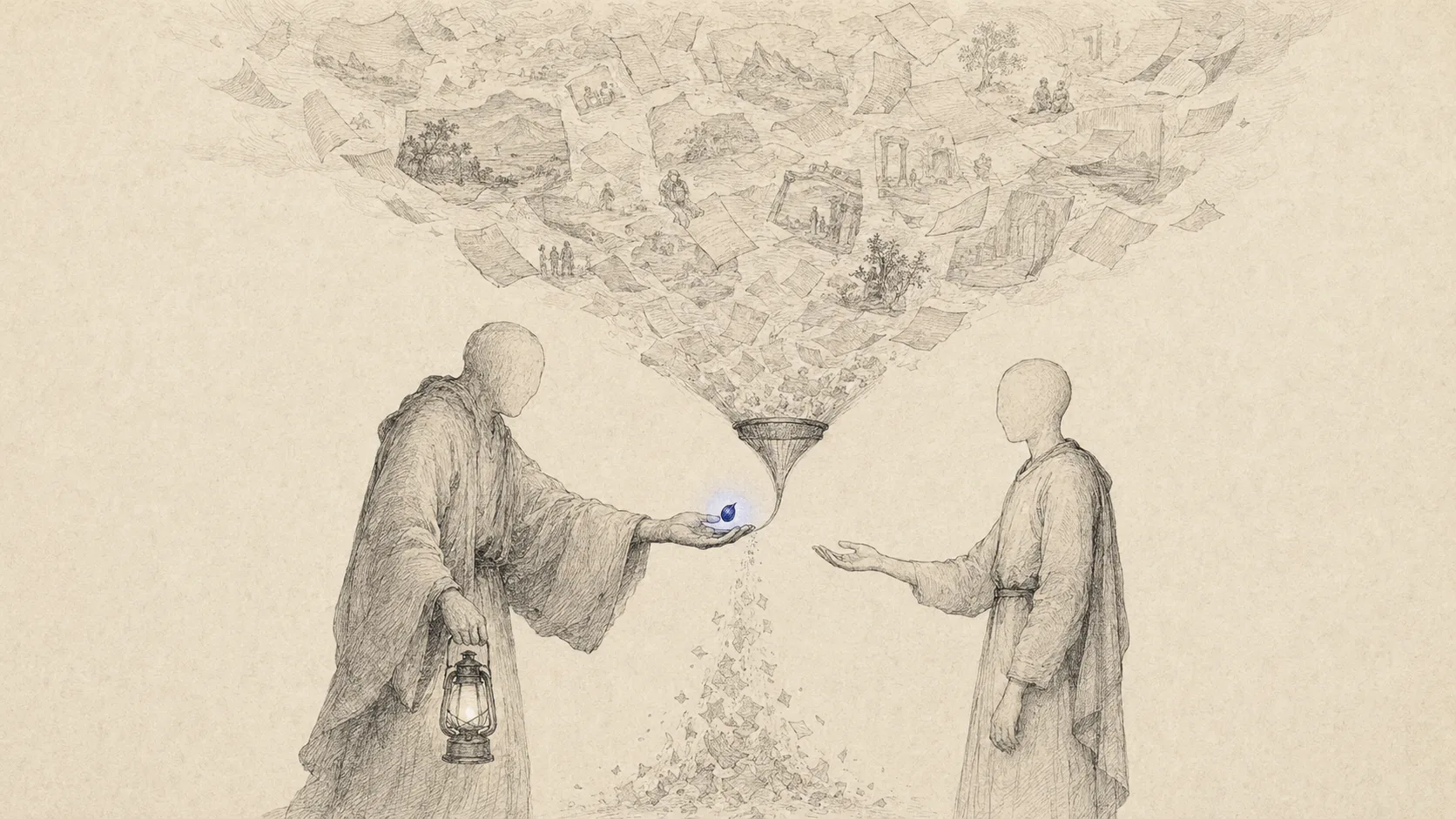
Inherited, Not Remembered: Lifecycle Consolidation for Successor Language Agents
When one AI model replaces another, the key question is not only what it remembers but what it can inherit with evidence. This paper tests whether lifecycle consolidation transfers a deployment-learned rule with auditable lineage while rejecting decoys and source episodes.

Abstract
Long-lived language agents increasingly accumulate experience during deployment, yet model lifecycles lack a widely adopted, experimentally distinguished account of how selectively audited deployment evidence should shape a successor. This paper proposes lifecycle consolidation: predecessor evidence is audited, abstracted into candidate faculties, transferred, and independently validated while episode-specific traces are excluded from active successor memory. The central identification problem is causal provenance. If designers or a stronger abstractor already know the target lesson, improvement may come from ordinary synthetic post-training rather than anything the predecessor discovered. We therefore propose a private synthetic environment containing a novel causal rule and intervention-sensitive decoys generated after base-model training. Only the predecessor encounters the rule through deployment outcomes. The three successor-transfer arms (direct episode transfer, curated distillation, and lifecycle consolidation) receive matched predecessor evidence, compute, generator access, reviewer time, selection budgets, and validation gates. Scratch is a no-history negative control; continual adaptation updates the predecessor and is therefore an operational alternative rather than an information- and identity-matched successor arm. The distinctive result is not capacity without recall alone, which distillation can also produce, but selective transfer of a deployment-derived rule with auditable lineage while rejecting decoys and source-episode details. Model replacement thereby becomes a testable problem of evidence-derived inheritance rather than simple substitution.
In simple terms
The main idea: inherit the lesson, but preserve the evidence for where it came from
When one AI model replaces another, the successor may need to benefit from what the predecessor learned during deployment.
The goal is not simply to copy old conversations or imitate the predecessor. It is to transfer useful capacities while excluding private episodes, local distortions, and unsupported lessons.
The provenance problem
A successor may appear to inherit a lesson even when the designers, reviewers, or a stronger teacher already knew the answer.
To prove that something was genuinely derived from predecessor experience, the experiment uses a private synthetic environment with a hidden causal rule created after base-model training.
Only the predecessor encounters the rule through its own successes, failures, and interventions.
The matched comparison
Three successor conditions receive the same predecessor evidence and matched resources: direct episode transfer, competent curated distillation, and lifecycle consolidation.
A scratch successor receives no predecessor history and acts as a negative control. Continuous fine-tuning updates the predecessor rather than creating a successor, so it is an operational alternative rather than a fully matched causal condition.
What lifecycle consolidation must show
The lifecycle-consolidated successor should learn the hidden rule, reject misleading surface correlations, avoid recalling source episodes, and preserve an auditable lineage from predecessor evidence to the transferred faculty.
Capacity without episode recall is not enough, because ordinary distillation may also produce that result.
If curated distillation matches lifecycle consolidation on behavior, leakage, lineage, and cost, lifecycle consolidation may remain a useful governance description but not a distinct learning method.
The success signature
The strongest result is selective, evidence-derived inheritance: the successor applies a rule discovered through predecessor deployment, rejects intervention-sensitive decoys, avoids source-episode leakage, and can show where the inherited faculty came from.
Keywords
License
 Creative Commons Attribution-NonCommercial-NoDerivatives 4.0 International