A few years ago, a friend showed me a guide to logical fallacies. I already knew some of them, but I had never seen the patterns explained so clearly or organized so well. Once I understood them, I could no longer stop noticing them.
Fallacies started appearing everywhere: newspaper articles, internet debates, political speeches, YouTube videos, conversations at work, and even academic papers, where I expected more rigor.
Deliberate deception explained only a fraction of what I was seeing. We all think through mental shortcuts. We generalize, choose evidence that confirms what we already believe, and build fragile arguments without noticing.
I began to wonder whether I could use AI to create a tool that offered a second opinion on the way we think. It would show readers what they might otherwise miss without pretending to rule a text true or false.
Many AI tools answer questions or write text, and they are very good at it. Jiddu starts from a different set of questions:
Which fallacies appear here?
Which claims can be checked?
Does one ideological bias dominate the text?
What evidence is missing?
Where is the argument weakest?
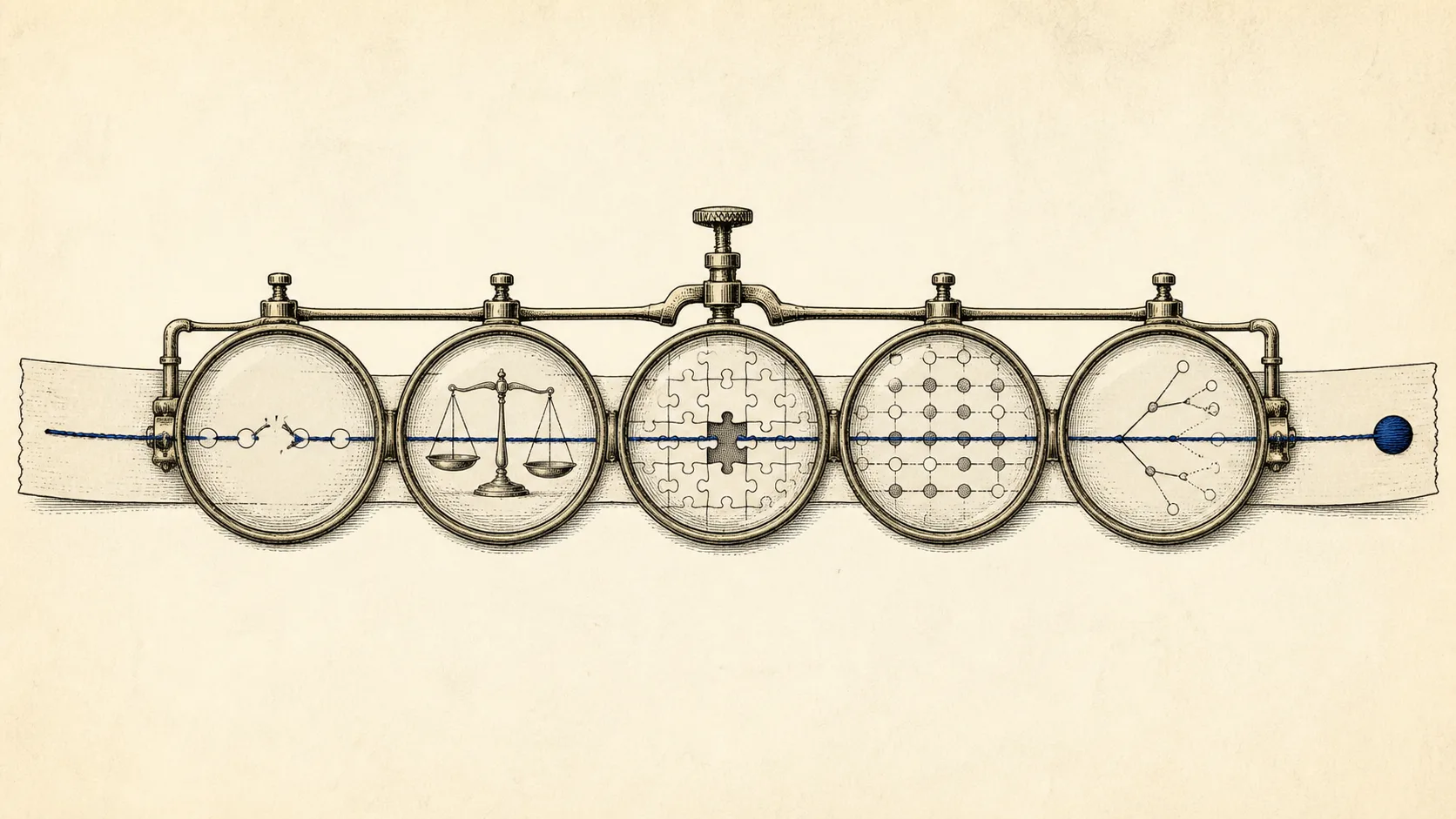
Like a lens, each Jiddu tool reveals a different aspect of the same source.
One lens searches for fallacies. The fact-checking lens isolates verifiable claims. The neutrality lens surfaces ideological tendencies and patterns of framing. The paper explainer helps readers work through scientific articles. The adversarial review approaches a manuscript like a skeptical reviewer, looking for the arguments that could be used against it before publication.
Jiddu leaves the final judgment with the reader, hence the slogan: Critical Reading.
A framework for critical thinking
While building the project, I realized that Jiddu's value comes from combining the lenses.
A reader can examine the reasoning, isolate claims, inspect the framing, test the evidence, and then return to the original text with better questions.
That structure is why I now think of Jiddu as a framework for critical thinking. Each lens has a narrow job, while the framework keeps them connected to the same source and to the reader's judgment.
The feature that excites me most
I recently added a mode called Live. It transcribes audio in real time and applies the same lenses while someone speaks.
During a lecture, interview, debate, or presentation, Jiddu can flag possible fallacies, verifiable claims, and argumentative patterns that deserve a closer look as they appear. The judgment remains yours. Jiddu directs your attention to the parts worth examining.
That kind of help matters most when persuasion is happening in real time: public speeches, interviews, debates, presentations, and content produced at scale.
Why “Jiddu”?
The name refers to Jiddu Krishnamurti, the philosopher who declared that truth is a pathless land. No creed, authority, or method, he argued, can hand truth to you; you have to examine things for yourself.
Whether or not I agree with every conclusion he reached, I have always admired the intellectual stance behind that phrase. Look for yourself before accepting someone else's answer.
With Jiddu, that stance becomes a reading habit. The tool gives you more ways to inspect an argument; you decide what follows.
The goal
Producing information has become almost effortless. Interpreting it still takes attention, context, and judgment.
The most valuable skill of the next few years may be reading what already exists with more care.
I created Jiddu to help readers slow down, inspect an argument from several angles, and exercise their own judgment with more clarity.